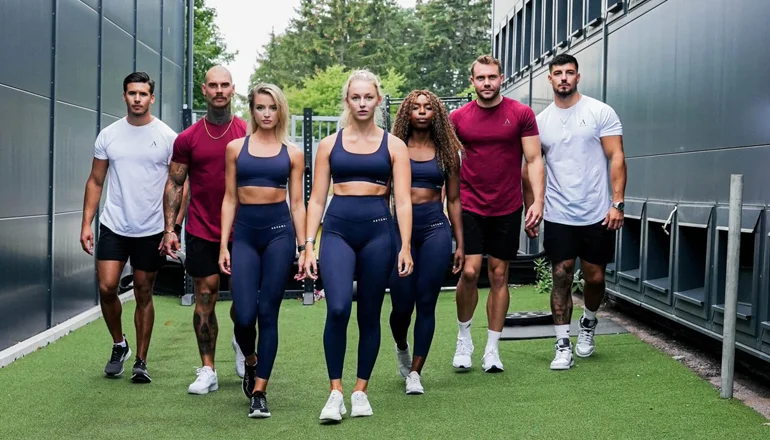






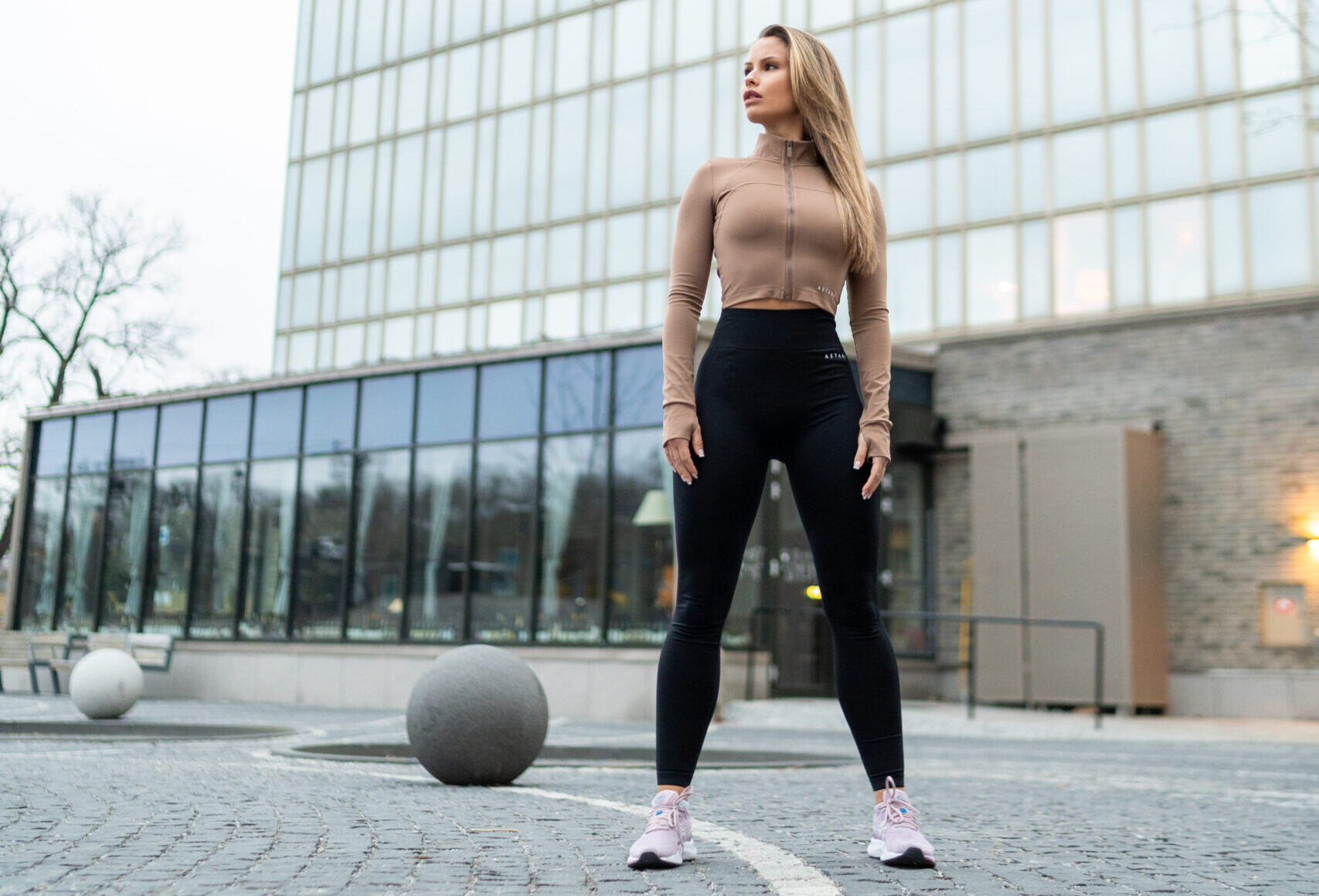
The right pair of workout tights changes how you train. The wrong pair will see through when you squat, slide down mid-rep, ride up your waist, or wear out after a handful of washes. The right pair gets out of your way — you stop thinking about your clothes and start training.
This guide is here to make that choice easy. We’ll cover the five things that actually matter when you’re shopping, how to match tights to what you actually do (lifting, running, yoga, padel, everyday), how to nail the sizing on your first order, and what to look for in the fabric. There’s also a sizing FAQ at the bottom that covers the questions we get most often.
By the end, you’ll know exactly which pair to buy — and why.
The 5 things that matter most
Before you click “add to cart” on any pair of tights, run through these five questions. Get them right and you’ll be wearing the pair for years.
1. Squat-proof opacity. Bend forward in the fitting room or at home. If you can see your skin through the fabric — even faintly — the tights will go see-through under load. Squat-proof tights use a denser knit (typically 250 gsm or heavier) or a tight weave that doesn’t thin out when stretched. Look for the phrase “squat-proof” or “non-see-through” stated explicitly, and check the gsm if the brand publishes it.
2. Waistband height. High-waisted (rises above the navel) holds your core, prevents rolling, and is ideal for lifting and high-impact moves. Mid-to-high (sits right at the navel) is comfortable for most workouts with less abdominal compression. Foldable bands let you adjust how high the waistband sits — useful if your day shifts from lifting to lounging. Tip: if you’re prone to muffin-top from low-rise tights, go high-waisted. The pressure should sit across your hips, not on your abdomen.
3. Compression vs casual fit. Compression tights are tight, supportive, and hold everything in place — best for high-impact training where you want zero movement and full body awareness. Casual or soft tights have a more relaxed feel and supersoft fabric — better for yoga, walking, recovery, and everyday wear. Most people end up with a mix: a compression pair for gym days, a softer pair for lifestyle.
4. Length. Full-length covers the ankle and is the most versatile (and warmest). 7/8 ends just above the ankle for a slightly cooler, modern silhouette. Capri ends mid-calf — dated for serious gym use but still popular for spin and warmer studios. Shorts or bike shorts are for hot weather or hot yoga. Use case decides this more than style preference — full-length is the safe default.
5. Pockets. Side pockets for your phone are now common in performance tights. If you walk to the gym, run outside, or use a fitness app on your phone, you’ll want them. Check that the pocket actually holds the phone securely (no bouncing) and that the seam doesn’t dig into your thigh during squats.
Match the tights to your activity
The “best” tights depend on what you actually do. Here’s how to match.
Yoga, Pilates, low-impact training
You want supersoft fabric that doesn’t constrict — yoga moves you into deep stretches and folds, and stiff compression tights fight you. Look for supersoft fabric (not gym-grade compression), a mid-to-high waistband that stays put during inversions, and full-length or 7/8 (no shorts — you’ll slide on the mat). If you also walk outdoors or move from a studio to a coffee run, a flared cut adds lifestyle versatility.
HIIT, circuits, CrossFit
Now you want compression. You’ll be jumping, sprinting, dropping into burpees, and lifting in the same session. Look for squat-proof opacity (you’ll be in compromising positions in front of mirrors), a high-waisted, locked-in waistband, and compression fabric that holds everything together — no riding down, no rubbing. Performance fabric, not seamless thin material. Pockets are a bonus for phones or chalk grip.
Running (road or treadmill)
Similar to HIIT but with a longer-duration focus on comfort. Look for flat seams that don’t rub, sweat-wicking fabric that pulls heat to the surface, snug but not skin-suffocating compression, and secure pockets that don’t bounce. Full-length for cool weather, 7/8 or shorts for warm.
Weightlifting and strength training
Lifting is the harshest test of squat-proofness. You’ll squat low, deadlift heavy, and bend at every angle. Look for maximum squat-proof opacity (think 250 gsm or heavier), stretch with recovery (the fabric must return to shape after being stretched), a high-waisted snug band that doesn’t roll, and no front seam — seams across the crotch dig in under load.
Padel, tennis, racquet sports
You’re moving laterally, lunging, and crouching for low balls. Heat builds. Look for seamless construction (no rubbing on the inner thigh), breathable sweat-wicking fabric, full-length or 7/8 (court surfaces are tough on bare skin), and a snug-but-not-restrictive fit so you have full range of hip motion.
Everyday and athleisure
The “athletic look” off the mat. Look for supersoft fabric (you’ll wear them for hours), a flattering cut (high-waisted is the most universally flattering), a flared leg if you want a lifestyle silhouette, and colors or patterns you’d actually wear out. The right athleisure pair feels like sweatpants but looks like tights.
Sizing — finding your fit
This is where most people get it wrong on a first order. A pair that’s too small will dig in and ride down all day; too big will sag and roll. Here’s how to nail it.
Measure yourself first
Take two measurements before you shop:
- Natural waist — narrowest point above your hips, below your ribs
- Hips — widest point around your seat
Use a soft tape, stand relaxed (not sucking in), and measure right against the skin. Write the numbers down — you’ll use them against every size chart.
Compression vs casual sizing
Compression tights are designed to be tight — the brand expects you to wear them taut. If you’re between sizes, size down for compression pairs (you want the fabric to do its job).
Casual or soft tights are designed to drape and move with you. If you’re between sizes, size up for these — extra room means more comfort, no pressure on the abdomen.
When to size down
- The brand explicitly says “size down” or “sized down” in the description
- You want maximum compression and hold
- The fabric is very stretchy (you can stretch the waistband two finger-widths or more)
- You’ve previously found this brand to run loose
When to size up
- The brand says “size up” or “true to size but slightly small”
- You have a wider waist-to-hip ratio (size up for hips, then take a band that fits)
- You’re between two sizes on a casual or lifestyle pair
- You want a foldable-down waistband (which needs extra fabric)
Astani-specific tip
Some Astani tights run smaller than you’d expect — check the size note on each product page. BLISS Scrunch Tights, for example, fit best one size down from your usual. SENSE and PEAK are true to size. AURA and DIVINE Flared Tights are true to size. Always read the fit note on the product page before you order.
Materials and features to look for
Now the fabric details — the spec sheet stuff that separates a €15 pair that lasts three months from a premium pair that lasts three years.
Squat-proof opaque fabric
The single most important quality of a workout tight. Look for nylon-spandex blends in 250 gsm or heavier (gsm = grams per square meter, the standard weight measurement for athletic fabrics). The denser the knit, the less the fabric thins when you stretch it, and the less likely you’ll go see-through under load. Cheaper polyester-only blends thin out fast — avoid them for serious training.
4-way stretch
The fabric stretches in all directions, vertical and horizontal. This matters for deep squats, side-bends, lunges, and any movement that takes the leg out of a straight line. If the fabric only stretches one way, you’ll feel it tug and bind.
Sweat-wicking
Modern athletic fabrics pull moisture from your skin to the surface where it evaporates faster. Look for descriptions like “sweat-wicking,” “moisture-wicking,” or “pulls sweat away” — and check for inner thigh ventilation if you sweat heavily.
Soft inner waistband
The waistband touches your skin for the entire workout. A scratchy, stiff band will rub raw spots after an hour. Look for waistbands described as “soft inner,” “brushed inside,” or “lined.” Wide bands (3-5cm) distribute pressure more comfortably than narrow elastic.
Smooth seams (no rubbing)
Cheap tights have raised, scratchy inner-thigh seams. Premium tights either use flat seams stitched to lie flat against the skin, or fully seamless knit construction. For running, padel, or any sport with repetitive leg motion, seamless or flat seams are essential.
Compression vs lifestyle blends
A high-spandex blend (8-15%) gives compression and recovery — the fabric snaps back to shape after each rep. A lower-spandex blend (2-5%) gives a softer, more lifestyle feel without the “second-skin” pressure. Most Astani performance tights run 90% nylon and 10% spandex at 250 gsm — the sweet spot of compression, opacity, and comfort.
Frequently asked questions
How do I know if my tights are squat-proof?
The squat test: stand in a fitting room with bright lights, bend forward at the hips, and look at the seat of the tights in a mirror or with your phone camera. If you can see your skin or underwear color through the fabric, they’re not squat-proof. Premium squat-proof tights use heavier 250+ gsm fabric and a dense knit that doesn’t thin out when stretched. The phrase “non-see-through” or “squat-proof” should be stated explicitly by the brand.
What’s the difference between leggings and tights?
In activewear, the terms are mostly interchangeable. Both are tight-fitting, full-length stretchy pants. Some brands use “leggings” for everyday or soft styles and “tights” for performance or compression styles, but there’s no industry-wide rule. Astani uses “tights” across the line because that’s the term most Swedish customers search for. Confusingly, “tights” in some other contexts (like dancewear or hosiery) means a sheer footed garment — but in activewear, no feet.
Are high-waisted tights better?
It depends on your body and what feels right on you. High-waisted tights hold your core, don’t roll down during squats or jumps, and give a flatter line under a fitted top — many people prefer them for training. But some bodies are built for a mid-rise or low-rise, and feel more comfortable that way. There’s no “correct” rise — the right answer is the one you feel good wearing. If you’re new to a brand, try both fits if you can before committing.
How tight should workout tights feel?
Snug, but not painful. Compression tights should feel firm everywhere — no slack fabric anywhere, and the waistband should grip without digging. You should be able to slide one or two fingers between the waistband and your skin. If you can’t slide a finger in, they’re too tight; if the waistband is loose enough to grab the fabric and pull it out an inch, they’re too big.
How long do good tights last?
Premium tights from a quality brand should last 2-5 years of regular use (3-4 sessions a week). The first thing to wear out is usually the waistband elastic, then the inner thigh from rubbing, then the fabric where you stretch it most (seat and knees). Cheap polyester tights from fast-fashion brands often start pilling and thinning at 3-6 months.
Can I wear workout tights every day?
Yes — modern activewear tights are designed for it. Look for “everyday” or “lifestyle” styles if comfort is the priority, and “performance” or “compression” if you’re alternating between gym and everyday wear. The same pair you wear for yoga or walking can go to the office or coffee shop without looking like gym clothes.
How should I wash workout tights to make them last?
Cold water (30°C or below), inside out, in a delicates bag if possible. Skip fabric softener — it clogs the wicking fibers. Air dry. Tumble drying breaks down the elastic faster than anything else. If you only follow one rule, it’s this: don’t tumble dry.
When should I replace my tights?
When the waistband loses its grip and rolls down, when you can see through them under load (even on a pair you previously wore confidently), or when the fabric pills heavily on the inner thigh from rubbing. Pilling alone isn’t a death sentence — but loss of opacity or stretch recovery is.
Find your perfect pair — the Astani guide
Astani makes six women’s tights collections. Here’s how to choose the right one for what you actually do — and how each one feels.
By what you do
High-impact and performance sport (CrossFit, Hyrox, running, court sports) → PEAK Tights
Built for impact, not lifestyle. PEAK uses performance fabric (not seamless) — designed to hold up under jumps, sprints, and serious heat. True to size.
Heavy lifting and gym (you want hold-it-together shaping) → SENSE Scrunch Tights
Seamless, thicker, less stretchy, 250 gsm — shapes the body and keeps everything held together under heavy loads. Mid-to-high waist, no front seam, scrunch back for a sculpted look. True to size.
Gym + scrunch back styling, softer and more adaptive → BLISS Scrunch Tights
Same seamless family as SENSE, but thinner, very stretchy fabric that moves with you. Higher waist than SENSE. Scrunch back for the lifted look. Fits one size down from your usual.
Gym, yoga, padel, everyday — sleek and seamless, no scrunch → EVE Seamless Tights
Same fabric family as BLISS — thin, stretchy, squat-proof — but with a flat back instead of scrunch. No visible seam lines under fitted tops. True to size. The all-rounder.
Low-intensity training, yoga, walking, lifestyle, cozy at home → AURA Flared Tights or DIVINE Wide Flared Tights
Both made from supersoft fabric for hours of wear. AURA has a slim flare. DIVINE has a wider flare for a more lifestyle silhouette. Both seamless front, high-waisted, true to size.
By how you want them to feel
- Firm, shaping compression → SENSE Scrunch (thicker, less stretchy)
- Soft, adaptive fit that moves with you → BLISS Scrunch (thinner, very stretchy)
- Sleek and seamless, no scrunch back → EVE Seamless
- Built for impact → PEAK
- Supersoft, all-day comfort → AURA Flared, DIVINE Wide Flared
Quick decisions
- Do CrossFit, Hyrox, run, or play sport? → PEAK
- Lift heavy and want shaping support? → SENSE Scrunch
- Want scrunch back styling but lighter fabric? → BLISS Scrunch
- Want sleek seamless without scrunch? → EVE Seamless
- Want yoga, walking, or lounge tights? → AURA Flared or DIVINE Wide Flared
Wrapping up
The right pair of tights gets out of your way. Whatever you do — lift, run, flow through yoga, walk the city, or curl up at home — there’s a fabric, fit, and rise that works for it. Use this guide to narrow it down before you shop, measure yourself before you order, and read the fit note on each product page to land your size on the first try.
Shop scrunch tights → · Shop sports bras → · Sign up for new releases →